Biological Culture Supplies: Essential Tools for Cell and Microbial Culture
Views: 0 Author: Site Editor Publish Time: 2026-08-26 Origin: Site
In modern laboratory environments, reliable consumables form the backbone of highly reproducible research. Even minor structural variations in plasticware can compromise sensitive assays and invalidate months of rigorous work. Poor sterility assurance or subtle material degradation frequently leads to devastating contamination events. Substandard lab materials introduce silent lot-to-lot variability, ultimately skewing critical data and heavily impacting overall operational efficiency due to failed experiments. To prevent these systemic failures, researchers must prioritize stringent quality control during the selection process. This article provides a specialized procurement framework for evaluating, selecting, and standardizing core laboratory supplies. We will explore how to choose the right tools based on distinct biological applications, proven material integrity, and strict regulatory compliance. You will learn actionable strategies to minimize workflow disruptions, assess vital vendor certifications, and consistently optimize experimental accuracy across scaling phases.
Key Takeaways
Selecting between tissue-culture (TC) treated and non-treated surfaces is critical for adherent versus suspension cell lines.
Balancing single-use plastics against reusable glassware requires assessing cross-contamination risks, autoclave workflows, and scale-up requirements.
Standardizing core consumables streamlines procurement and minimizes workflow disruptions during high-throughput scaling.
Differentiating Needs: Cell Culture vs. Microbial Culture
Laboratories frequently handle diverse biological models. You must align your procurement strategy directly to these biological requirements. A single standardized approach often fails because fragile mammalian cells demand vastly different environments than robust bacterial strains. Evaluating these distinct needs ensures you purchase appropriate Biological Culture Supplies without exhausting budgets on unnecessary specifications.
Mammalian & Insect Cell Culture Requirements
Mammalian and insect cells are highly sensitive entities. They require strictly controlled environments to maintain viability and natural phenotypic expression. Adherent cell lines, such as HeLa or CHO cells, cannot attach to raw hydrophobic plastics. They rely on specific surface chemistries. Manufacturers modify these surfaces using plasma gas to create a hydrophilic matrix. This treatment allows integrin proteins to anchor securely. Furthermore, these cultures exhibit extreme sensitivity to leachables, extractables, and endotoxins. Trace chemical residues from poor-quality resins can trigger stress pathways or induce apoptosis. Gas permeability also plays a massive role. Flasks and plates must facilitate precise oxygen and carbon dioxide exchange to maintain media pH buffers.
Microbial & Fungal Culture Requirements
Microbial and fungal organisms behave differently. Yeasts and bacteria thrive in suspension and replicate rapidly. Their cultivation emphasizes volume capacity and vigorous aeration mechanisms over specialized surface chemistries. Fungi and bacteria tolerate baseline plastic materials well. They rarely require tissue-culture surface treatments. However, they remain highly vulnerable to cross-batch contamination. Fast replication rates mean a single stray microbe can overtake a culture overnight. You must prioritize secure closures and reliable sterilization when sourcing supplies for these models.
Evaluation Checkpoint
Always define the biological model firmly before finalizing procurement orders. Avoid over-specifying requirements. For example, purchasing ultra-pure, tissue-culture-treated plates for basic E. coli broth cultures wastes significant resources. Conversely, under-specifying supplies for delicate stem cell work risks total experiment failure. Match the material grade directly to the organism's vulnerability profile.
Culture Requirements Comparison Chart
Cultivation Type
Key Supply Focus
Tolerance to Material Leachables
Typical Surface Requirement
Mammalian & Insect
Strict sterility, precise gas exchange, surface charge
Extremely Low
Hydrophilic (TC-Treated)
Microbial & Fungal
Volume scaling, agitation, secure closures
Moderate
Hydrophobic (Non-Treated)
Evaluating Essential Biological Culture Supplies
Selecting the right individual tools requires deep understanding of their mechanical and biological functions. Each consumable plays a dedicated role in the laboratory workflow. Let us break down the essential components.
The Petri Dish: Surface Area and Aeration
The Petri Dish remains a universal staple for agar-based microbial cultivation. Researchers rely on it heavily for initial clonal selection and bacterial streaking. When evaluating this tool, assess polystyrene clarity first. High optical clarity allows automated colony counters to function without errors. Next, evaluate the venting mechanisms. Lids typically come in ribbed or non-ribbed formats. Ribbed lids contain small internal projections. They lift the lid slightly to ensure controlled gas exchange. This airflow prevents severe condensation bridging. Condensation drips can pool on the agar, smearing isolated colonies and ruining weeks of isolation work. Non-vented dishes suit longer incubations where media desiccation poses a greater threat.
The Cell Culture Plate: High-Throughput Standardization
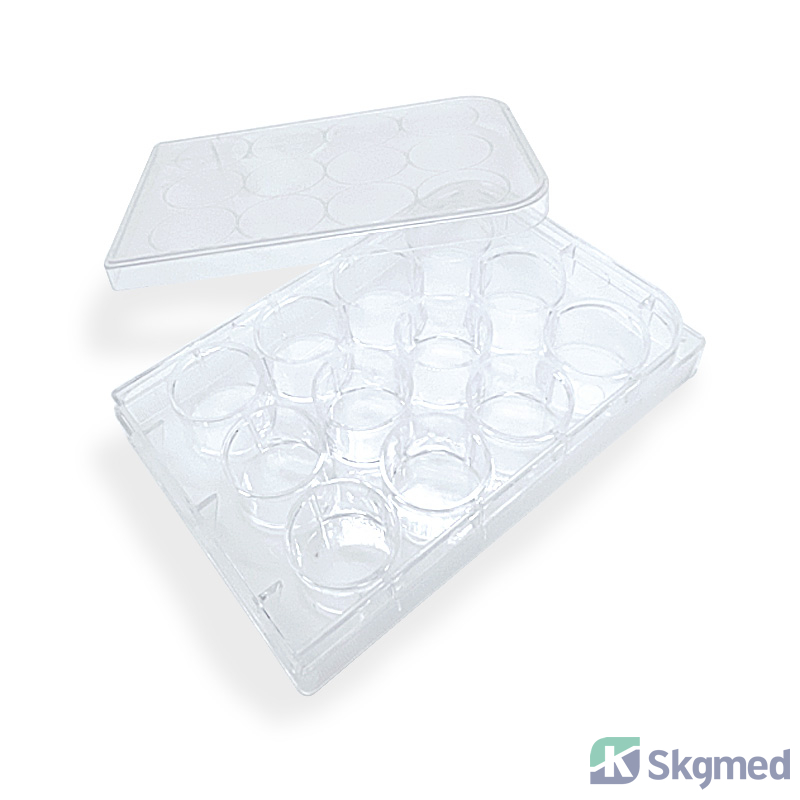
For scaled adherent cultures and complex assays, researchers turn to the Cell Culture Plate. They dominate screening workflows in multi-well formats, typically ranging from 6 to 384 wells. Surface treatment consistency represents the primary decision criterion. You must verify uniform vacuum-plasma treatment across every single well. Inconsistent treatment causes uneven cell monolayers, invalidating optical assays. Well geometry also matters deeply. Flat-bottom wells provide the optical clarity necessary for inverted microscopy. U-bottom and V-bottom designs facilitate cellular pelleting during centrifugation and aggressive washing steps. Finally, watch out for edge effects. Long incubations often cause rapid evaporation in the outer perimeter wells. Premium plate designs feature specialized evaporation barriers or moat systems to maintain consistent media volumes universally.
The Culture Tube: Agitation and Gas Exchange
Liquid suspension cultures and sample storage protocols require a reliable Culture Tube. Cap design dictates performance here. Dual-position snap caps offer exceptional versatility. You can leave them resting loosely to foster aerobic environments or snap them down firmly for secure anaerobic storage. Material stress limits heavily influence procurement decisions. Polypropylene tubes deliver high chemical resistance and endure extreme centrifugation speeds without shattering. Polystyrene tubes sacrifice physical strength for superior optical clarity, making them ideal for visual density inspections but hazardous in high-speed rotors.
The Inoculation Loop: Contamination vs. Cost
Streaking and transferring microbial colonies demands precision. The Inoculation Loop serves this exact purpose. Reusable loops, crafted from Nichrome or Platinum, require a high initial investment. They demand strict, repetitive flame-sterilization protocols. If an operator fails to cool a metal loop properly before touching a colony, it can aerosolize dangerous pathogens instantly. Single-use disposable plastic loops eliminate this biohazard entirely. They eradicate cross-contamination risks and ensure highly precise volume transfers, typically available in calibrated 1µL or 10µL sizes. While they increase recurring consumable budgets and generate plastic waste, they safeguard sample integrity brilliantly.
Material Integrity and Sterility Standards
High-quality experimental outcomes depend entirely on flawless material integrity. Compromised raw materials introduce hidden variables. These variables slowly degrade cellular health and produce false data.
Resin Quality & Leachables
Laboratories must demand virgin polystyrene and virgin polypropylene. Recycled or low-grade plastics present severe risks. They frequently contain slipping agents, plasticizers, and biocides from previous processing cycles. These hidden compounds act as leachables. They migrate into warm culture media over time. Once dissolved, they artificially alter cellular phenotypes, inhibit proliferation, and mimic biological triggers. To ensure safety, verify compliance with USP Class VI testing standards, which certify plastics for strict biological applications.
Sterility Assurance Levels (SAL)
Simply labeling a product "sterile" provides insufficient assurance. You must evaluate the vendor's specific sterilization processes. Industry standards demand a minimum Sterility Assurance Level (SAL) of $10^{-6}$. This metric indicates a one-in-a-million probability of a single viable microorganism surviving the sterilization process. Leading manufacturers achieve this through controlled gamma-irradiation or precise electron-beam (e-beam) processing. Both methods destroy microbial DNA without leaving chemical residues behind.
Certifications of Analysis (CoA)
Trustworthy vendors readily supply lot-specific Certificates of Analysis. Procurement teams must collect and review these documents routinely. A robust CoA provides quantitative proof of quality control. Ensure your supplies meet the following critical thresholds:
Endotoxins: Levels must remain exceptionally low, typically strictly below 0.1 to 0.5 EU/mL. Endotoxins trigger aggressive immune responses in mammalian cells.
Nucleic Acid Free: Products must carry certified DNase, RNase, and human DNA-free status. Contamination here destroys sensitive PCR downstream assays.
Non-Pyrogenic: Certification guarantees the absence of fever-inducing substances, vital for primary cell cultures and vaccine development workflows.
Implementation Risks and Workflow Integration
Procuring excellent supplies represents only half the challenge. Integrating them into active laboratory workflows introduces distinct operational risks. Proactive management prevents workflow bottlenecks.
Lot-to-Lot Variability
Lot-to-lot variability remains the highest hidden penalty in cell culture operations. A sudden shift in plastic formulation can halt a massive screening campaign abruptly. You must mitigate this risk actively. Never commit to bulk annual contracts blindly. Request representative batch samples first. Run parallel validation tests using a highly sensitive control cell line. Only proceed with large-scale procurement once you verify consistent morphology and growth kinetics across multiple lots.
Automation Compatibility
High-throughput laboratories rely heavily on robotics. Liquid handlers and automated plate readers operate within sub-millimeter margins of error. If your chosen consumables deviate slightly in size, robotics will crash, spilling costly reagents. Verify compliance meticulously. Cell culture plates and storage tubes must adhere strictly to ANSI/SLAS dimensional standards. This global standard ensures uniform footprints, well depths, and flange dimensions. It guarantees seamless integration across diverse automated platforms.
Supply Chain Resilience
Modern laboratories cannot afford stockouts. Assess vendor inventory stability carefully. Relying on niche, single-region manufacturers without distribution redundancies invites disaster. Global supply chain shortages can easily halt essential lab operations. Protect your research timelines by implementing the following strategies:
Audit primary vendors for geographically diverse manufacturing facilities.
Establish relationships with verified secondary suppliers for core consumables.
Maintain a safety stock representing at least three months of average usage.
Procurement Logic and Next Steps
Strategic purchasing transforms procurement from an administrative chore into a powerful scientific advantage. You need a structured approach to transition lab protocols smoothly.
Vendor Consolidation
Grouping purchases often unlocks significant bulk pricing advantages. Consolidating your biological culture supplies under two or three primary vendors streamlines inventory management. It reduces administrative overhead effectively. However, heavy consolidation limits flexibility. If a primary vendor alters a manufacturing process, your entire workflow suffers. Balance bulk discounts against the need for diversified, specialized suppliers.
Sampling Protocol
Transitioning an entire lab to a new consumable brand carries risk. Always mandate a strict sampling protocol. Test new plates, flasks, and tubes rigorously. Use an established, highly sensitive cell line for these validations. Run side-by-side growth curves against your current trusted supplies. Document attachment rates, proliferation speeds, and final yield. Data-driven validation eliminates subjective complaints from laboratory staff.
Actionable Step
Do not wait for a contamination crisis to re-evaluate your tools. Request a technical specification sheet and a sample pack of targeted consumables today. Run a thorough side-by-side validation against your current inventory. This simple step often reveals surprising performance gaps in older supplies.
Conclusion
The selection of biological culture supplies is not a generic administrative task; it is a fundamental scientific control.
Prioritizing material clarity, certified sterility, and application-specific designs ensures highly reproducible data and highly predictable operational parameters.
Matching specialized tools like proper cell culture plate treatments and reliable culture tubes directly to distinct biological models prevents wasted resources.
Encourage continuous evaluation of current lab standards and contact technical specialists periodically to audit ongoing consumable performance.
FAQ
Q: What is the difference between tissue-culture treated and non-treated plasticware?
A: TC-treated plastics undergo a specific surface modification, usually via plasma gas exposure. This process makes the naturally hydrophobic polystyrene hydrophilic and negatively charged. This modification allows anchorage-dependent mammalian cells to attach and proliferate. Non-treated plastics remain hydrophobic and are ideal for suspension cultures where cellular attachment is unwanted.
Q: How long is the shelf life of pre-sterilized biological culture supplies?
A: Pre-sterilized supplies typically maintain a shelf life of 3 to 5 years from the exact date of manufacture. You must store them in a cool, dry place. Keep them away from direct UV exposure, as ultraviolet light rapidly degrades plastic polymers and eventually compromises the sterile packaging seals.
Q: Are disposable inoculation loops more cost-effective than reusable metal loops?
A: Yes, particularly at scale. Disposables drastically reduce labor time because operators skip cooling wait periods. They eliminate the constant need for gas burners and entirely remove severe cross-contamination risks. For high-volume labs, these operational efficiencies easily offset the recurring purchase price of single-use plastics.
Q: Why is endotoxin certification important for cell culture plates?
A: Endotoxins are hardy lipopolysaccharides derived from shattered bacterial cell walls. They routinely survive standard sterilization methods. In mammalian cultures, they trigger severe inflammatory responses, alter natural cell growth, and skew delicate assay results drastically, even when no live bacteria remain present in the sample.