In the high-stakes environment of a laboratory, equipment selection often determines the success or failure of critical assays. Choosing the wrong culture tube leads to contamination, stalled cell growth, sample evaporation, and wasted technician hours. These hidden costs accumulate quickly, turning a minor procurement oversight into a significant operational bottleneck. Unlike general chemistry vessels or blood collection vials, a high-quality Culture Tube must meet specific biological requirements, including precise gas exchange, surface adhesion properties, and guaranteed sterility.
Procurement managers and lab directors often face a crowded market of generic options. However, distinguishing between standard test tubes and specialized culture vessels is essential for data integrity. This guide evaluates material composition, closure technologies, and automation compatibility to help you optimize Total Cost of Ownership (TCO). We will explore how specific features, such as two-position caps and skirted bottoms, directly influence workflow efficiency and experimental reproducibility.
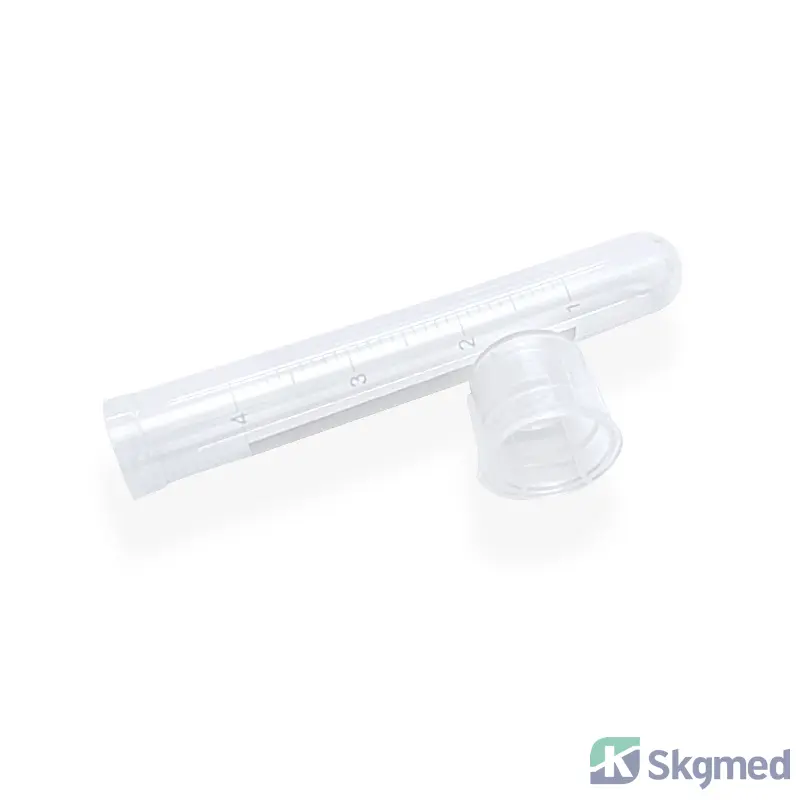
Key Takeaways
Aeration vs. Sealing: Why culture tubes with two-position closure caps are the industry standard for managing gas exchange without compromising sterility.
Material Matrix: When to pay the premium for Borosilicate Glass (reusability/chemical stability) vs. Polystyrene (optical clarity/disposability) vs. Polypropylene (durability/chemical resistance).
Automation Readiness: How skirted bottoms and specific dimensions (e.g., 12x75mm, 17x100mm) impact high-throughput workflow efficiency.
Compliance Check: The non-negotiable certifications (RNase/DNase-free, non-pyrogenic) required for sensitive tissue culture applications.
Material Composition: Aligning Substrate with Biological Needs
Selecting the correct substrate is the first step in ensuring your samples remain viable. The material must align with your specific analytical method, whether it requires optical clarity for microscopy or chemical resistance for solvent-based extraction. We evaluate materials based on three core pillars: optical transmission, chemical inertness, and cell adhesion properties.
Polystyrene (PS) – The Visual Choice
Polystyrene is the preferred polymer for applications requiring glass-like transparency. It offers exceptional optical clarity, making it indispensable for visual inspection and colorimetric assays where turbidity measurements are routine.
Best for: Flow cytometry, turbidity analysis, and observational tissue culture.
Limitation: It possesses moderate chemical resistance and is strictly single-use. You cannot autoclave PS tubes, as they will deform under high heat.
Decision Trigger: Choose PS if your technicians perform manual visual monitoring of colony growth or require clear optical paths for instrumentation.
Polypropylene (PP) – The Utility Choice
Polypropylene serves as the workhorse of the laboratory. It is chemically robust and mechanically durable. Unlike PS, PP is translucent rather than clear, which may hinder direct visual inspection of small precipitates. However, its strength allows it to withstand high centrifugation speeds (often up to 3000–6000 x g) without cracking.
Best for: Sample storage, harsh chemical exposure, and pelleting cells via centrifugation.
Capability: Most PP tubes are autoclavable, though you must check manufacturer specifications to confirm heat tolerance limits.
Decision Trigger: Select PP when durability during transport or resistance to solvents like phenol or chloroform is necessary.
Borosilicate Glass – The Reusable Standard
Glass remains the gold standard for applications involving extreme temperature shifts or aggressive solvents. Borosilicate glass minimizes leaching, ensuring that no plasticizers interfere with sensitive bioassays.
Best for: Anaerobic growth, heating applications, and protocols requiring absolute zero-leachables.
ROI Consideration: Glass commands a higher upfront cost. However, it offers a lower long-term TCO if your facility already maintains a validated cleaning and sterilization infrastructure.
Surface Treatment Factor
Beyond the base material, the surface treatment dictates how cells interact with the tube wall.
| Treatment Type | Mechanism | Primary Application |
| Tissue Culture (TC) Treated | Hydrophilic surface modification (negative charge) | Required for adherent cell lines (e.g., fibroblasts) to anchor and grow. |
| Non-Treated | Natural hydrophobic surface | Required for suspension cells (e.g., lymphocytes) to prevent unwanted attachment. |
Closure Technology: Balancing Gas Exchange and Contamination Risk
One of the most critical challenges in cell culture is the Aeration Dilemma. Aerobic bacteria and mammalian cells require a constant supply of oxygen to thrive. However, allowing air in creates a pathway for airborne contaminants like fungal spores. The closure system must manage this delicate balance.
Culture Tubes with Two-position Closure Cap
The industry solution to the aeration dilemma is the use of Culture Tubes with Two-position Closure Cap. This design features a specialized cap that functions in two distinct modes without being removed from the tube.
Mechanism: In the Loose position, the cap allows sterile gas exchange and venting, essential for active culture growth. In the Tight position, it creates a leak-proof seal for anaerobic conditions or secure storage.
Use Case: These are ideal for labs running workflows that transition from aerobic culture growth to sealed incubation or transport.
Advantage: It eliminates the risky step of swapping caps between phases, significantly reducing the chance of accidental contamination.
Screw Caps (Standard)
Standard screw caps provide a secure seal but lack the nuanced control of two-position designs. They often rely on liners (Phenolic or Polypropylene) to maintain integrity. While excellent for storage, using them for culture requires technicians to manually back off the threads to allow air in. This practice is imprecise and often results in caps falling off or varying oxygen levels between replicates.
Plug/Snap Caps
Snap caps offer speed. They allow for rapid manipulation in high-throughput manual workflows where screwing and unscrewing caps would cause repetitive strain or time delays. However, they carry higher risks. The seal integrity is lower than threaded options, leading to increased evaporation rates during long-term incubation. They are best suited for short-term assays or non-volatile storage.
Dimensions and Physical Specifications for Scalability
Standardization ensures your consumables fit your capital equipment. Deviating from standard dimensions can render expensive centrifuges and automated handlers useless.
Standardization for Equipment Compatibility
Two primary sizes dominate the clinical and research landscape:
12x75mm (5mL): This is the universal standard for flow cytometry (FACS) instruments. It is also widely used for routine dilutions and radioimmunoassays (RIA).
17x100mm (14mL): This larger format is preferred for general bacterial growth, allowing for greater culture volumes and better aeration dynamics when placed on shakers.
Decision Point: Before ordering bulk quantities, audit your existing centrifuge rotors, tube racks, and heating blocks. Ensure the tube diameter and height align with your hardware specifications.
Bottom Geometry
The shape of the tube bottom dictates its function within the workflow.
Round Bottom: Optimal for mixing and aeration. The smooth curve prevents cells from getting trapped in corners and aids in sediment recovery.
Conical Bottom: Essential for centrifugation. This shape concentrates pellets at a single point, making it easier to aspirate the supernatant without disturbing the sample.
Flat/Skirted Bottom:
Automation Factor: Skirted tubes stand upright without racks.
Efficiency: This stability is critical for automated liquid handlers and barcode scanning systems. It prevents tipping and misalignment errors that cause robotic jams.
Sterility, Compliance, and Packaging Logistics
For biological applications, the physical tube is only as good as its purity profile. Regulatory compliance and sterility assurance are non-negotiable for clinical and pharmaceutical testing.
Sterility Assurance Levels (SAL)
Not all clean tubes are sterile. For sensitive cell culture, you must mandate a Sterility Assurance Level (SAL) of 10^-6. This probability ensures that only one in a million units might contain a viable microorganism. Non-sterile options are acceptable only if your lab utilizes Glass or PP tubes and has a validated, rigorously monitored autoclaving protocol in place.
Contaminant Control
Beyond living microbes, chemical and biological residues can ruin experiments.
RNase/DNase Free: These enzymes degrade genetic material. Certified free tubes are critical for molecular biology applications like PCR or sequencing preparation.
Non-Pyrogenic/Endotoxin Free: Endotoxins can trigger immune responses in cells, skewing data. This certification is mandatory for pharmaceutical testing, vaccine development, and sensitive mammalian cell lines.
Packaging Configurations
Packaging impacts both cost and sterility maintenance.
Bulk Packed: These offer a lower cost per unit and reduce packaging waste. They are best for high-volume, lower-sensitivity tasks where tubes are used immediately or sterilized later.
Tray/Rack Packed: These come ready-to-use in organized racks. While the cost per unit is higher, they increase efficiency by eliminating setup time. They also maintain sterility better during sequential use, as you only expose the tubes you need.
Cost Analysis and Procurement Strategy
Procurement decisions should focus on Total Cost of Ownership (TCO) rather than just the price per case. A cheap tube that leaks or ruins a week-long culture ends up being the most expensive option.
Total Cost of Ownership (TCO) Model
When comparing disposable plastics against reusable glass, consider the operational expenses (OpEx).
Disposable (Plastic): Low Capital Expenditure (CapEx) but higher OpEx over time. However, they eliminate the labor costs associated with washing, the utility costs of autoclaving (water/electricity), and the risk of cross-contamination.
Reusable (Glass): High initial CapEx. The OpEx is moderate but requires significant infrastructure. You must factor in the cost of detergents, breakage replacements, and the technician time required for cleaning validation.
Supply Chain Risks
Vendor consistency is crucial. Lot-to-lot variations in plastic resin or surface treatment can alter cell attachment rates, causing unexplained shifts in experimental data. We recommend keeping a validate stock for critical assays to bridge potential supply gaps. Always evaluate if a vendor provides lot-specific certificates of analysis (CoA).
Shortlisting Logic
Use this four-step logic to finalize your selection:
Step 1: Define Application. Do you need Adherent (TC Treated) or Suspension (Non-Treated) surfaces?
Step 2: Determine Gas Needs. If you are growing aerobic cultures, prioritize the Culture Tube with a two-position cap.
Step 3: Check Equipment Fit. Verify rotor and rack sizes (12x75mm vs. 17x100mm).
Step 4: Select Packaging. Choose racked packaging for sterile workflows and bulk for general chemistry.
Conclusion
Selecting the right culture vessel is a balancing act between process security and operational cost. While generic test tubes may suffice for simple chemical mixing, biological workflows demand specific substrates, precise dimensions, and guaranteed sterility. The trade-off is clear: saving pennies on lower-quality consumables often risks dollars in lost samples and repeated experiments.
For critical biological applications, using a certified sterile Culture Tube with a Two-position closure cap offers the highest protection. This configuration manages the vital gas exchange required for cell health while sealing out contaminants that destroy data. By aligning your material choice with your biological needs and automating compatibility, you ensure a robust, reproducible, and cost-effective laboratory workflow.
FAQ
Q: What is the difference between a culture tube and a test tube?
A: A culture tube is specifically designed for growing biological organisms. It typically features defined sterility levels (SAL 10^-6), specific surface treatments (TC treated), and specialized closures like two-position caps to allow gas exchange. A standard test tube is often a general-purpose vessel for chemistry or clinical work, focusing on holding liquids rather than supporting cell growth, and may not be certified RNase/DNase free.
Q: When should I use a two-position closure cap vs. a standard screw cap?
A: Use a two-position closure cap for aerobic cultures (bacteria/yeast) that require oxygen exchange during incubation but need to be sealed later for storage. The dual position allows venting without removing the cap. Standard screw caps are better for long-term storage where a hermetic seal is required to prevent evaporation, or for anaerobic conditions where no oxygen should enter.
Q: Can I autoclave polypropylene culture tubes?
A: Generally, yes. Polypropylene (PP) is heat-resistant and usually capable of withstanding standard autoclave cycles (121°C at 15 psi). However, you must always check the manufacturer's technical data sheet. Some PP blends or caps may deform under high heat or pressure, especially if the caps are screwed on tightly during the sterilization process.
Q: Why is Polystyrene (PS) not recommended for freezing?
A: Polystyrene is a rigid, brittle plastic. At freezing temperatures, specifically below 0°C, it becomes extremely prone to cracking and shattering. This compromises sample integrity and creates safety hazards. For freezing applications, particularly cryogenic storage, Polypropylene (PP) or specialized cryovials are required due to their flexibility and temperature resistance.
Q: What size culture tube fits a standard flow cytometer?
A: The 12x75mm culture tube (typically 5mL capacity) is the universal industry standard for flow cytometry instruments (FACS). Using this specific dimension ensures the tube fits correctly into the sample injection port, preventing equipment damage or sample aspiration errors.


