Sterile Sampling Swabs for Viral Testing: What Makes a Good Swab?
Views: 0 Author: Site Editor Publish Time: 2026-08-12 Origin: Site
Diagnostic accuracy begins long before a biological specimen reaches the laboratory doors. The physical collection process establishes the ultimate ceiling for all subsequent testing success. A poorly executed initial sample compromises every downstream analytical step entirely. A compromised specimen at the point of collection frequently leads to dangerous false negative results. This diagnostic failure forces unnecessary patient re-testing and ultimately endangers broader community care protocols. Even the most highly sensitive modern laboratory assays cannot rescue degraded RNA or insufficient viral loads. We will explore the defining physical characteristics of premium clinical collection tools in detail. You will discover how specific synthetic materials maximize viral yield and protect delicate specimens during transit. Ultimately, we provide a clear, actionable framework to help you procure reliable diagnostic supplies safely.
Key Takeaways
Flocked nylon swabs offer superior elution and viral yield compared to traditional spun fibers.
A reliable virus sampling swab must pair seamlessly with its transport medium to prevent viral degradation or RNA/DNA inhibition.
Ergonomic shaft design with precise break points prevents cross-contamination and simplifies lab processing.
Validating manufacturer compliance (ISO 13485, CE/FDA marks) is non-negotiable for mitigating supply chain and clinical risks.
The Anatomy of a High-Yield Disposable Virus Sampling Swab
The physical construction of a collection tool dictates its clinical efficacy. Medical manufacturers engineer these instruments to capture and release microscopic biological evidence efficiently. We must examine the materials closely.
Tip Material and Capillary Action Physics
Traditional clinical swabs rely on tightly wound cotton or rayon fibers. These spun materials absorb biological fluids like a dense sponge. They form a thick internal matrix. This matrix traps viral particles deep inside the head. When you submerge a spun swab into liquid media, it refuses to release the specimen. You frequently lose a massive percentage of the collected viral load.
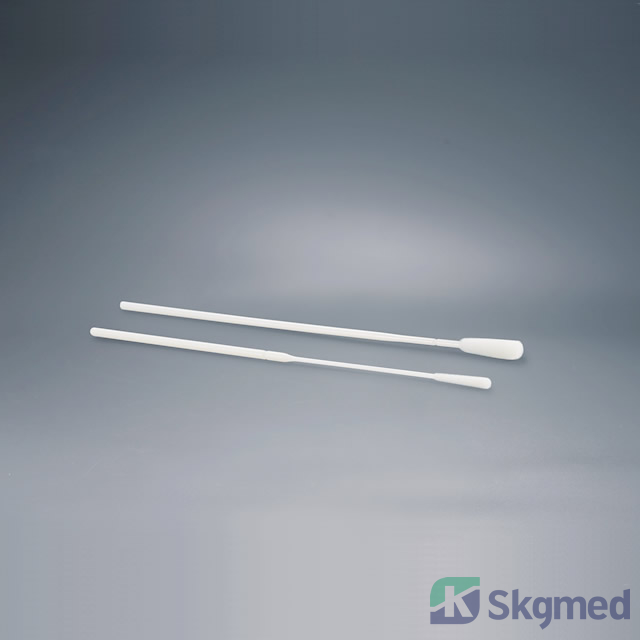
Modern diagnostics demand a better approach. Engineers developed flocked nylon fibers to solve this exact retention problem. Manufacturers spray thousands of microscopic nylon strands onto an adhesive-coated tip electrostatically. These tiny fibers stand perfectly perpendicular to the core. They create strong capillary action. This draws liquid up between the strands without absorbing it internally. When you place a Disposable Virus Sampling Swab into a tube, it releases the specimen instantly. We observe significantly higher elution rates. This rapid release maximizes the sensitivity of subsequent molecular assays.
Comparison Chart: Flocked Nylon vs. Traditional Spun Swabs
Feature
Flocked Nylon Swab
Traditional Spun Swab (Cotton/Rayon)
Fiber Structure
Perpendicular, brush-like strands
Tightly wound internal matrix
Specimen Absorption
Surface-level capillary action
Deep internal fluid absorption
Elution Rate (Release)
High (Often >80-90%)
Low (Often <20-30%)
PCR Interference Risk
Extremely Low
High (Fatty acids/calcium alginate)
Shaft Design and Clean Break Points
The applicator shaft plays a critical role in laboratory safety and processing speed. Premium manufacturers utilize medical-grade Acrylonitrile Butadiene Styrene (ABS) or high-impact polystyrene. These plastics offer optimal rigidity for handling. They also provide necessary flexibility for patient comfort.
Molded break points represent a vital safety feature. Technicians process hundreds of specimens daily. They must snap the shaft to fit it inside transport containers. A poorly designed shaft splinters unpredictably. This generates sharp micro-plastics. Worse, an uneven break creates hazardous splashing. Splashing aerosolizes infectious viral particles into the laboratory air. A precision-molded break point snaps cleanly and predictably. You simply drop the broken shaft directly into the Applicator Tube with Swab. This engineering protects laboratory personnel from biohazard exposure entirely.
Sterilization Standards
Background contamination ruins molecular diagnostics. Manufacturers must achieve a Sterility Assurance Level (SAL) of 10^-6. This standard ensures only one in a million items might contain viable microorganisms. Facilities typically employ Ethylene Oxide (EO) gas or Gamma irradiation. Gamma irradiation breaks down microbial DNA effectively. EO gas penetrates packaging to disrupt cellular metabolism. You must verify these sterilization certificates upon delivery. Proper sterilization prevents false positive results. It guarantees your highly sensitive laboratory machinery only amplifies the actual patient specimen.
Specimen Preservation: Integrating the Transport Swab with Medium
Collecting the specimen only solves half the clinical equation. You must transport it safely to the laboratory. Environmental temperature fluctuations degrade delicate viral envelopes rapidly. RNA shears easily without proper chemical stabilization.
Active vs. Inactivated Transport Media
You must choose your transport liquid carefully based on your downstream testing methodology. Standard Viral Transport Media (VTM) keeps the virus alive. It contains proteins, antibiotics, and antifungals. These ingredients suppress bacterial overgrowth while maintaining viral viability. We use VTM primarily for viral culture or live-virus research protocols.
Conversely, molecular diagnostics require a completely different chemical environment. Inactivated media contains powerful chaotropic salts like guanidine thiocyanate. This liquid lyses the viral envelope immediately upon contact. It destroys dangerous nucleases instantly. This process stabilizes the fragile nucleic acids (RNA/DNA). We use inactivated media exclusively for rapid RT-PCR testing. It renders the sample completely non-infectious. This protects transport couriers and receiving staff from accidental exposure.
System Compatibility
Chemical compatibility between all physical components dictates testing success. The adhesive binding the nylon flocks must not react chemically in the liquid. The plastic shaft must not leach inhibitory compounds. Sourcing components from different vendors increases failure risks exponentially. We strongly recommend purchasing a complete Virus Sampling and Preservation Kit. This ensures chemical harmony. The manufacturer tests the tip, shaft, and liquid together extensively. You avoid unexpected PCR inhibition.
Leak-Proof Tube Design
Biohazard leaks halt laboratory operations immediately. A premium Transport Swab with Medium must survive severe physical trauma. Transport tubes endure pneumatic delivery systems in large hospitals. They experience extreme pressure changes during air-cargo shipping. Look for heavy-duty polypropylene plastics. Evaluate the closure mechanism carefully. Secure screw caps require precise threading. Integrated silicone O-rings provide a necessary secondary seal. These specific features prevent catastrophic liquid loss during transit.
Evaluating Swab Types by Clinical Collection Site
Human anatomy dictates collection tool geometry. Applying a universal instrument to all collection sites invites clinical failure. You must match the physical dimensions exactly to the anatomical target area.
Table: Clinical Collection Sites and Required Specifications
Collection Site
Required Shaft Flexibility
Tip Geometry
Primary Use Case
Nasopharyngeal (NP)
Ultra-flexible / Tapered
Miniature micro-tip
Deep respiratory viral panels
Oropharyngeal (OP)
Rigid / Stiff
Large, robust flocked bulb
Throat and tonsillar sampling
Anterior Nasal
Moderate / Short break point
Broad, rounded tip
Patient self-collection / POC
Nasopharyngeal (NP) Requirements
The nasopharynx sits deep behind the nasal cavity. Reaching it requires extraordinary precision. NP instruments demand ultra-flexible, tapered shafts. They must navigate the delicate nasal septum without causing physical trauma. A rigid shaft induces extreme pain and frequently triggers bleeding. Blood introduces heme into the sample. Heme acts as a powerful PCR inhibitor. A properly engineered micro-tip gathers cellular material gently and safely.
Oropharyngeal (OP) / Throat Swabs
Throat sampling requires a distinctly different physical approach. The posterior pharynx and tonsillar arches demand firmer pressure. OP instruments utilize stiffer shafts. You must scrape robust cellular material effectively. These tools feature significantly larger flocked tips. The expanded surface area maximizes mucosal absorption. A flexible NP shaft would simply bend uselessly against the tonsils.
Anterior Nasal and Mid-Turbinate Swabs
Point-of-care testing frequently relies on anterior nasal collection. We design these specifically for patient self-administration. They feature broader, rounded tips. They capture ample mucosal fluid just inside the nostril. They utilize much shorter break points. This ergonomic design reduces patient anxiety dramatically. We see rapid deployment of these designs in decentralized clinical settings.
Implementation Risk
Deploying incorrect geometry carries severe implementation risks. Patient discomfort destroys clinical compliance. If a procedure hurts, patients flinch and pull away prematurely. This reaction reduces the specimen volume drastically. A minimal sample directly causes false negative laboratory reports. Specifying the correct Virus Sampling Swab for each precise anatomical site guarantees better diagnostic outcomes.
Best Practices and Common Mistakes
Best Practice: Always align the break point line with the rim of the transport tube before snapping.
Best Practice: Store transport media away from direct sunlight to prevent chemical degradation.
Common Mistake: Using scissors to cut shafts. This introduces massive cross-contamination risks.
Common Mistake: Touching the flocked tip to environmental surfaces prior to patient collection.
Procurement E-E-A-T: Compliance, Scalability, and Supply Chain Risks
Sourcing medical diagnostic supplies carries profound public health implications. You must interrogate vendor credentials exhaustively. Supply chain failures during localized outbreaks endanger communities. We rely on strict auditing frameworks.
Regulatory and Quality Auditing
You must establish a rigorous checklist for evaluating manufacturers. Demand proof of ISO 13485 certification immediately. This standard verifies they operate a comprehensive medical device quality management system. It ensures total raw material traceability. If a batch fails, they can track the exact polymer lot. Verify their FDA registration status or European CE marking. Furthermore, investigate their cleanroom environments. Manufacturing must occur in ISO Class 8 (Class 100,000) facilities. These controlled environments utilize heavy HEPA filtration. They prevent ambient environmental DNA from settling on the products.
Inhibitor-Free Guarantees
Modern RT-PCR assays amplify microscopic quantities of genetic material. They detect specific viral targets brilliantly. However, they remain highly vulnerable to enzymatic contamination. Human skin sheds nucleases constantly. You must verify lot-testing protocols. The manufacturer must guarantee their product arrives completely free of RNase and DNase. They must also certify the absence of human DNA. Even minor contamination degrades viral RNA before it reaches the extraction machine.
Scalability and Lead Times
Predicting biological testing demand proves notoriously difficult. Flu season triggers massive, sudden consumption spikes. You must evaluate your vendor's true production scalability. Do they operate automated robotic assembly lines? Can they handle sudden volume surges? Assess their packaging versatility carefully. High-throughput automated laboratories often require bulk packaging to feed robotic liquid handlers. Conversely, mobile clinics need individually wrapped peel-pouches. Choose a manufacturing partner who adapts to your specific operational throughput dynamically.
Shortlisting Logic: How to Choose Your Diagnostic Partner
Selecting the right manufacturing partner requires systematic evaluation. We recommend following a structured logical progression to mitigate operational risks.
Step 1: Assay Alignment
You must identify your exact laboratory testing platforms first. Review the Instructions for Use (IFU) provided by your machinery manufacturer. Do you run traditional viral cultures? Are you deploying rapid antigen cassettes? Does your facility rely exclusively on automated RT-PCR systems? Your specific assay dictates your chemical media requirements entirely. Live culture demands VTM. Rapid PCR requires molecular inactivation media. Never guess chemical compatibility.
Step 2: Sample Trials
Never authorize bulk procurement blindly. Always request validation sample kits from prospective vendors. Distribute these units to your senior laboratory technicians. Ask your team to test the physical break-point mechanics repeatedly. Have them evaluate the tube seal integrity by shaking and dropping them. Run blind studies to measure the physical elution rates via Cycle threshold (Ct) comparisons. Real-world validation in your exact laboratory environment exposes hidden design flaws quickly.
Step 3: Workflow Integration
Evaluate how the physical tube interacts with your existing laboratory hardware. Tubes must fit perfectly into standard centrifuge rotors. They must align with automated decapping machines. If a tube is two millimeters too wide, it jams robotic liquid handlers. This causes catastrophic workflow bottlenecks. Measure dimensional tolerances precisely.
Conclusion
The "best" swab remains highly contextual to your specific diagnostic assay and target collection site.
Pairing collection tools seamlessly with compatible transport media prevents costly PCR inhibition.
Rigorous vendor audits (ISO 13485, RNase-free guarantees) protect your laboratory from supply chain failures.
Call to Action: Encourage your procurement team to request a validation sample kit today. Consult with a technical diagnostic specialist to match the right physical configuration to your exact clinical protocols.
FAQ
Q: Can I use a cotton swab for viral testing?
A: No. Traditional cotton swabs contain naturally occurring fatty acids. Swabs using calcium alginate also pose severe risks. These organic compounds actively inhibit downstream PCR testing. Additionally, the dense wound matrix of cotton traps the virus internally, preventing effective elution into the transport media. Always use synthetic flocked nylon for viral diagnostics.
Q: What is the shelf life of a virus sampling and preservation kit?
A: Most commercial kits maintain a stable shelf life of 12 to 24 months. You must store them strictly according to manufacturer guidelines. Extreme temperature fluctuations rapidly degrade the chemical integrity of the transport medium. Always check the expiration date printed on the individual tube before patient collection.
Q: How does an inactivated transport medium affect testing?
A: Inactivated media contains strong chaotropic salts that immediately lyse the viral envelope. This action destroys infectious capability while simultaneously stabilizing the fragile nucleic acids (RNA). This makes the sample completely safe to handle during transport. However, it makes viral culture entirely impossible.
Q: Why is the break point on a transport swab so important?
A: The molded break point allows the shaft to snap cleanly at a precise length. This ensures the broken stick fits perfectly inside standard collection tubes. Without it, technicians must use scissors to cut the shaft manually. Manual cutting introduces massive cross-contamination risks and creates hazardous aerosols.