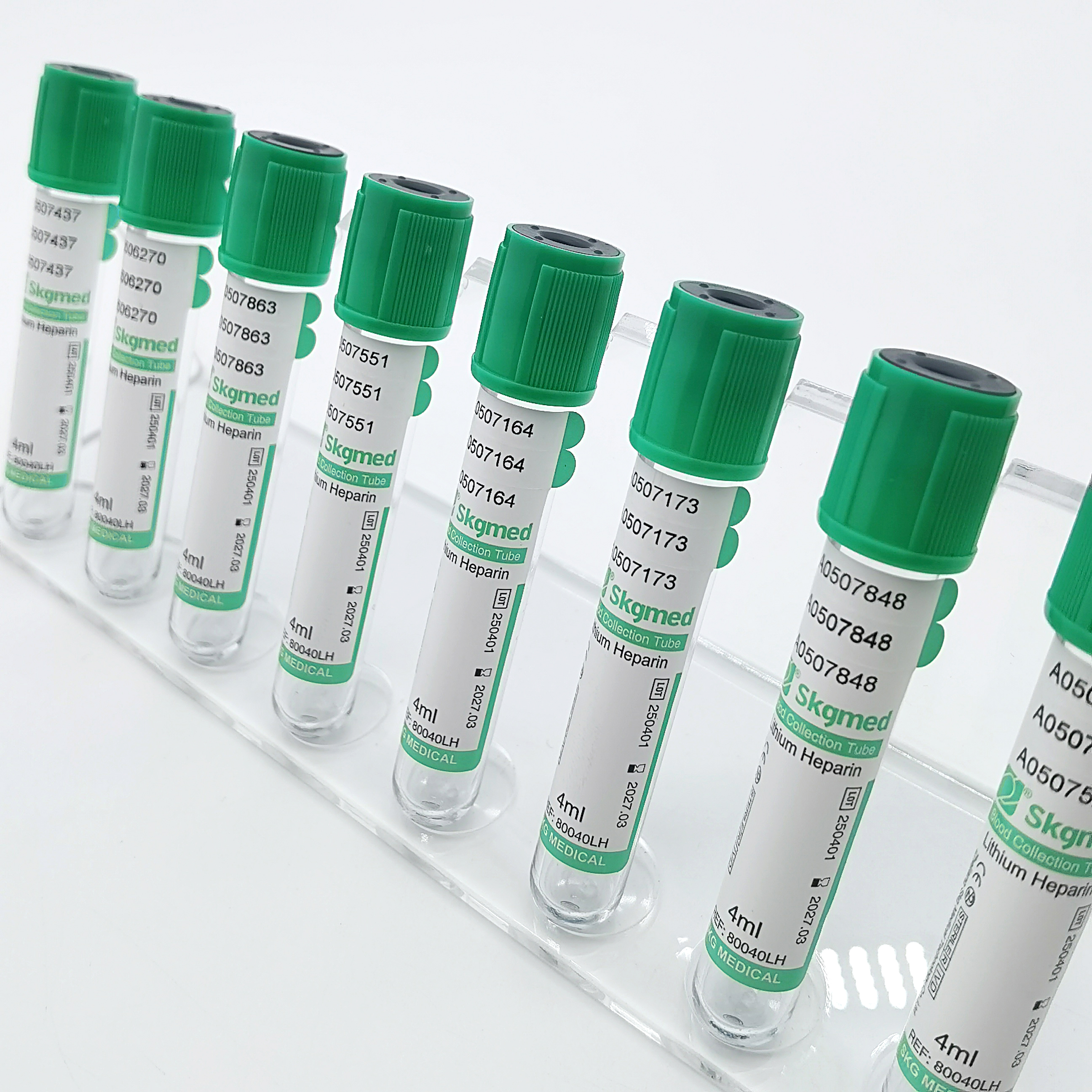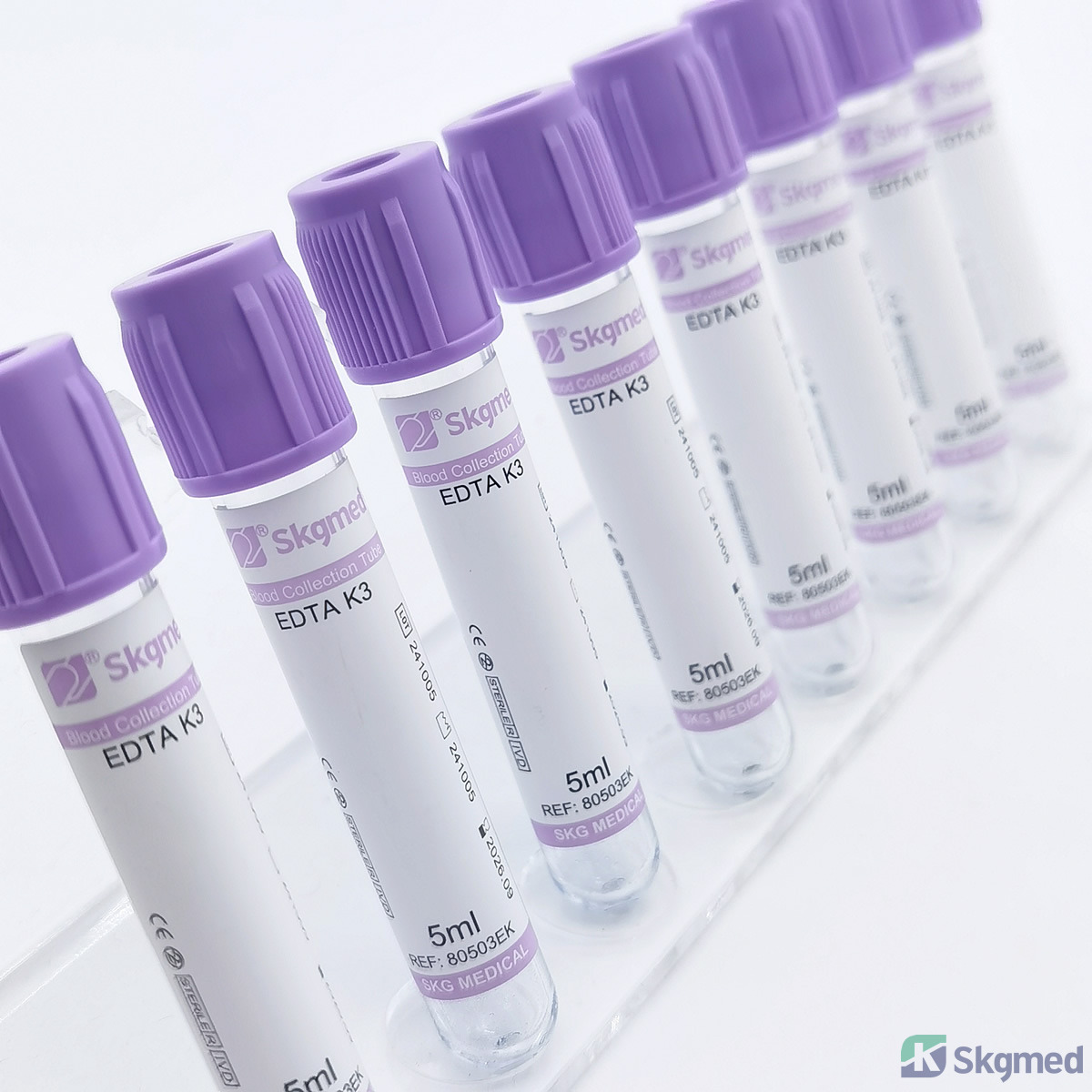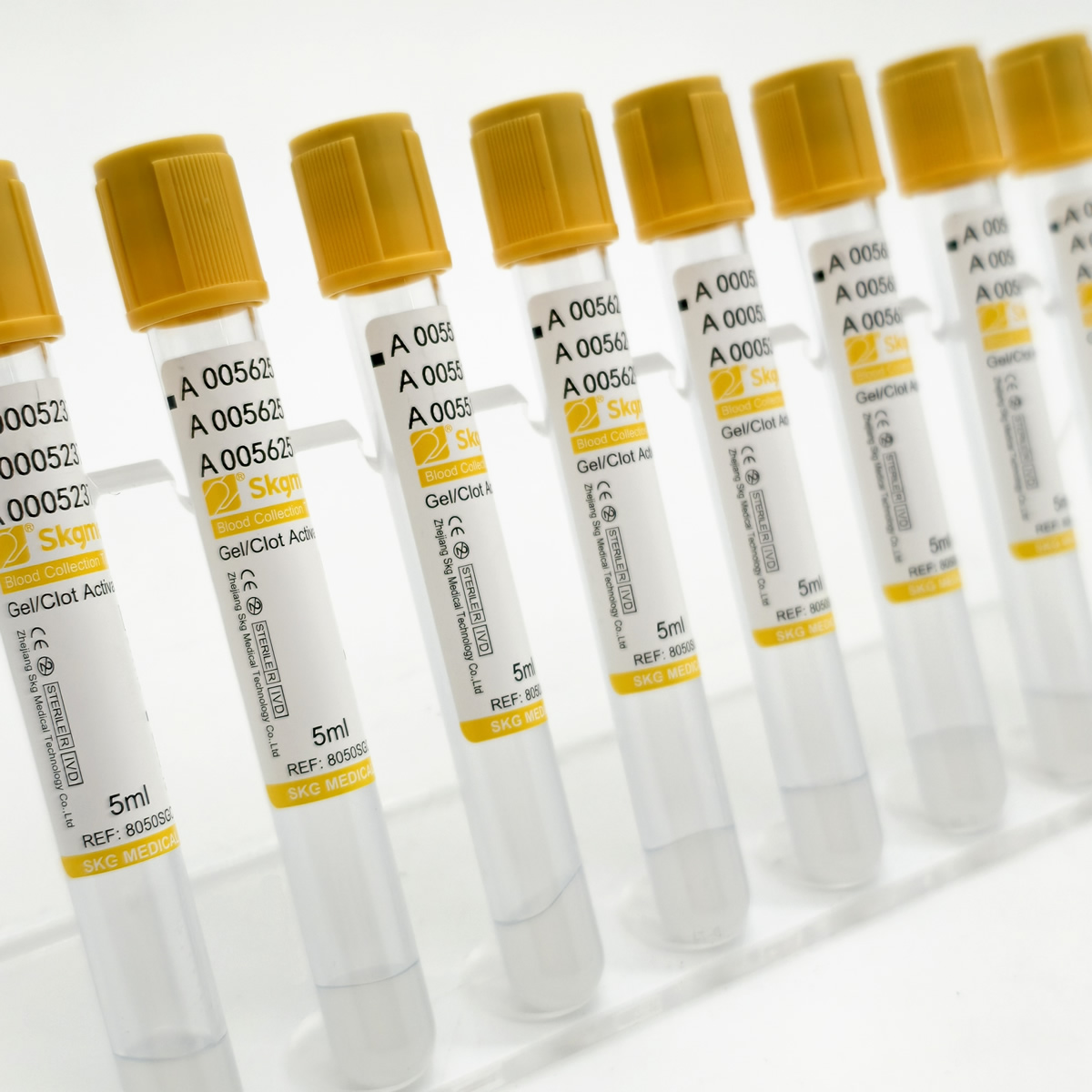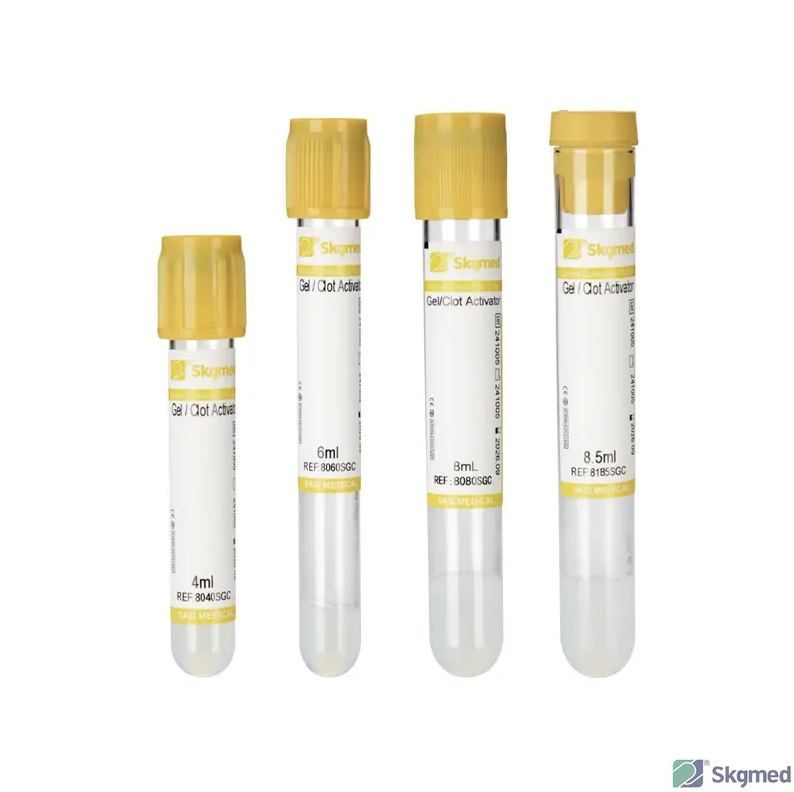
Blood Collection Tube Manufacturer & Supplier
Product Category
SKG Medical offers a comprehensive range of blood collection tubes for clinical laboratories, hospitals, diagnostic centers, and medical distributors. With multiple tube types, additives, sizes, and collection volumes available, we provide flexible product options to meet different specimen collection and laboratory testing requirements.
Advantages of SKG Medical Blood Collection Tubes
SKG Medical blood collection tubes combine reliable performance, flexible configurations, and controlled manufacturing to meet different clinical and laboratory requirements. Explore the key advantages that make our blood collection tubes suitable for a wide range of specimen collection applications.

Wide Range of Sizes and Volumes
Different tube dimensions and collection volumes are available to meet varied laboratory requirements. For example, SKG Medical offers multiple configurations including 13 × 75 mm, 13 × 100 mm, and 16 × 100 mm tubes across selected product ranges.
OEM and Label Customization
SKG Medical supports customized labeling options for selected blood collection tubes, including OEM labels, barcode labels, and detachable labels, helping distributors and medical suppliers meet different market requirements.


Automated Manufacturing and Quality Control
SKG Medical manufactures blood collection tubes in a controlled production environment with automated production lines and an established internal quality control system. Our facility includes a 100,000-class cleanroom, and our production follows ISO 13485 and CE-related quality requirements.
Consistent Additive Application
For selected blood collection tubes, SKG Medical uses automated equipment to apply additives accurately to the inner tube wall. This helps support effective mixing and consistent anticoagulation performance.

Why Choose Us?

Controlled Manufacturing
We manufacture our blood collection tubes in a controlled production environment with automated production lines and standardized manufacturing procedures to support consistent product quality.

Strict Quality Management
Our facility includes a 100,000-class cleanroom, and our production and quality management systems follow ISO 13485 and applicable CE-related requirements.

Flexible Supply Solutions
Different tube sizes, collection volumes, additives, and packaging configurations are available to support distributors, laboratories, and medical procurement projects.

Professional Customer Support
Our team works closely with customers to understand their application, specification, quantity, and customization needs, helping them select suitable blood collection tube solutions.
Related Blogs
-
Blood collection is a vital medical procedure that plays a crucial role in diagnosing and monitoring a patient's health. It is the foundation of countless tests that help healthcare professionals evaluate and understand a patient’s condition. However, one essential aspect of the blood collection process that often goes unnoticed is the type of needle used during venipuncture.Product News
FAQs
- Q: We were using SKGMED Blood Collection K3 EDTA tube and now we are receiving K2 EDTA tubes. What are the differences physically and clinically? What do we need to do?A:The salts of the chelating agent EDTA are used as anticoagulants for hematology testing because they preserve cellular components of the blood.
- Q: What's Physical Difference of K2 and K3 EDTA?A:• K2/K3 EDTA solution is spray-dried on the interior surface of the plastic tubes.• K3EDTA is a liquid solution in the glass tubes.It should be emphasized that irrespective of the EDTA salt used for anticoagulation, all tubes must be inverted 8-10 times to ensure thorough mixing of the blood with the anticoagulant.
- Q: What's Clinical Differences for K2 and K3 EDTA?A:The International Council for Standardization in Haematology and NCCLS have recommended K2EDTA as the anticoagulant of choice for blood cell counting and sizing for the following reasons1,2:• K3EDTA results in greater RBC shrinkage with increasing EDTA concentrations(11% shrinkage with 7.5 mg/ml blood).• K3EDTA produces a larger increase in cell volume on standing (1.6% increase after 4 hours).• K3EDTA leads to lower MCV values (typically a -0.1 to -1.3% difference is observed compared with K2EDTA).• K3EDTA is a liquid additive, and therefore, will result in the dilution of the specimen. All directly measured values (Hgb, RBC, WBC, and platelet counts) have been reported to be 1-2% lower than results obtained with K2EDTA2,3.• With some instrument systems, K3EDTA gives lower WBC counts when used at high concentrations. Brunson, et al., reported that plastic tubes containing K2EDTA gave complete blood count and differential results in excellent agreement with glass tubes containing K3EDTA, though they confirmed the earlier results of 1-2% higher WBC, RBC, hemoglobin, and platelet count results with the former tube, owing to dilution observed with K3EDTA4.• Our internal studies showed no clinically significant differences when comparing K3EDTA glass tubes to K2EDTA plastic tubes.
- Q: What's difference between ACD solution A and ACD solution B?A:ACD is available in two formulations.Both solutions are comprised of trisodium citrate, citric acid and dextrose.The formulations are as follows:
ACD Solution A ACD Solution B Trisodium Citrate 22.0g/L 13.2g/L Citric Acid 8.0g/L 4.8g/L Dextrose 24.5g/L 14.7g/L