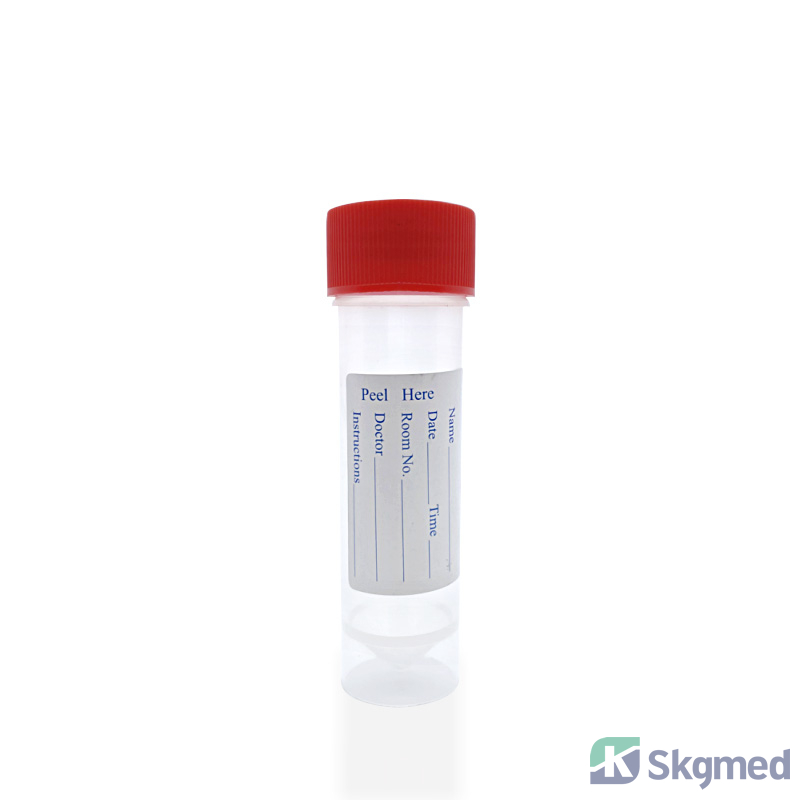
How to Select the Right Specimen Container for Different Biological Samples
Views: 0 Author: Site Editor Publish Time: 2026-08-04 Origin: Site
Pre-analytical errors account for up to 70% of laboratory errors today. Improper collection and transport mediums drive a massive portion of these failures. Moving past basic definitions reveals a harsh operational reality. Selecting the wrong specimen container leads directly to sample rejection. You face compromised assays, delayed patient diagnoses, and inflated procurement costs.
Clinical laboratories need a standardized framework for evaluating and sourcing these critical items. You must base your decisions on the specific sample type. You also need to factor in your lab automation requirements and strict regulatory compliance. This comprehensive guide will show you how to navigate these complexities. You will learn to optimize workflow reliability, protect handler safety, and eliminate hidden logistical expenses.
Key Takeaways
Evaluating a specimen container requires balancing material chemistry (e.g., Polypropylene vs. Polystyrene) with specific biological sample requirements to prevent degradation.
Urine specimen containers and sputum specimen containers demand distinct design parameters, such as leak-proof threading and integrated transfer systems, to protect handler safety and sample integrity.
Procurement decisions should prioritize vendor lot-to-lot consistency, compatibility with automated lab equipment, and ISO/CLSI compliance over base unit cost.
Always implement a validation phase with sample lots before committing to a facility-wide rollout.
The Operational and Clinical Costs of Poor Container Selection
Inadequate collection vessels cause cascading failures across laboratory workflows. These failures directly impact clinical outcomes. When a vessel fails, it halts the diagnostic process entirely. Immediate sample rejection is the most common result. Leaks destroy attached barcode labels. Non-sterile interiors introduce external bacterial contamination. Chemical leaching from cheap plastics alters sensitive assay targets. These metrics of failure are unacceptable in a modern clinical environment.
Consider the financial reality of these failures. Purchasing sub-standard consumables might look like a cost-saving measure initially. However, these negligible upfront savings disappear quickly. You pay a heavy price for patient redraws. Courier re-runs add massive hidden expenses to your logistics budget. More importantly, compromised clinical data damages institutional trust. A pediatric patient called back for a redraw represents a significant failure in care quality.
A successful procurement decision minimizes pre-analytical variables. It must integrate seamlessly into your existing transport logistics. The vessels you choose must fit your lab automation equipment perfectly. True success means your technicians rarely think about the vessel itself because it performs flawlessly every time.
Evaluating clinical vessels requires a deep dive into material science. Different plastics yield entirely different clinical outcomes. Polypropylene (PP) provides exceptionally high chemical resistance. It stays durable during harsh transport conditions. You will find it ideal for freezing biological materials at ultra-low temperatures. Polystyrene (PS), on the other hand, offers high optical clarity. This clarity helps technicians conduct rapid visual inspections. However, PS becomes brittle under extreme stress. It may crack during high-speed centrifugation.
Closure integrity is vital for transit security. You must evaluate thread designs carefully. Look for inner O-rings and tamper-evident seals. Many procurement officers assume a "tight" feel equates to a leak-proof seal. This assumption is a dangerous mistake. You must demand pneumatic tube system (PTS) validation. Vessels traveling through a PTS face rapid pressure changes. Without a certified 95 kPa pressure rating, lids will pop off and contaminate the entire transport tube.
Sterility levels also vary significantly across manufacturers. "Aseptically produced" does not mean sterile. It simply means manufactured in a clean environment. Gamma-irradiated containers offer true, certified sterility. You must decide when this clinical premium is justified. Molecular assays usually demand true sterility. Routine chemistry tests might only require aseptic production.
Automation scalability requires strict dimensional consistency. Modern laboratories rely heavily on robotics. Decapping robots need predictable, uniform vessel sizes. A variation of even one millimeter can jam a decapper. High-visibility barcoding needs adequate, un-textured surface areas on the vessel body. Ribbed or heavily curved surfaces cause barcode scanner misreads.
Best Practices for Evaluation
Always request the resin data sheet from the manufacturer.
Avoid mixing caps and cups from different production lots.
Test barcode adhesion after freezing the vessel for 24 hours.
Matching Container Types to Specific Biological Samples
Sourcing Urine Specimen Containers
Volume requirements dictate your initial selection. Standard capacities range from 90ml to 120ml. This sizing accommodates multi-test aliquoting effectively. Sometimes you need empty vessels for immediate processing. Other times, you specify vessels pre-filled with boric acid. These chemical stabilizers protect the sample during delayed transport. They prevent bacterial overgrowth for up to 48 hours.
Design plays a major role in technician safety. Technicians benefit greatly from integrated closed-system transfer devices. Straws and needle ports built into the lid minimize hazardous exposure. Choosing reliable urine specimen containers enhances both handler safety and diagnostic integrity. Closed systems prevent spills during the transfer to vacuum tubes.
Sourcing Sputum Specimen Containers
Biosafety is the absolute top priority here. Sputum carries a high infectious risk, particularly concerning mycobacteria. Patients often struggle to provide these viscous samples. Emphasize wide-mouth designs to facilitate difficult collection. A wide mouth prevents the patient from contaminating the exterior of the cup.
Structural integrity is also crucial for processing. Look for conical bottoms inside the vessel. They are often freestanding due to an outer skirt. This specialized shape assists in direct centrifuge processing. You do not need to pipette the dangerous sample into a secondary tube. High-quality sputum specimen containers streamline your entire microbiology workflow while keeping staff safe.
Tissue, Stool, and Specialized Samples
Tissue samples require absolute formalin compatibility. The plastic must not degrade when exposed to harsh preservatives. You need wide-mouth access to accommodate larger surgical excisions. Secondary leak-proof packaging is mandatory for tissue transport. Stool samples demand integrated collection spoons or spatulas attached to the lid. You must also verify the plastic's compatibility against specific extraction buffers used in enteric pathogen panels.
Sample Type
Ideal Material
Critical Features
Automation Priority
Urine
Polypropylene (PP)
Closed-system port, Boric acid option
Decapper compatibility
Sputum
Polypropylene (PP)
Wide-mouth, Conical inner bottom
Direct centrifugation
Tissue
Polypropylene (PP)
Formalin resistance, Secure O-ring
Clear visual inspection
Stool
Polystyrene (PS) or PP
Integrated spoon, Buffer compatible
Standardized threading
Navigating Compliance, Safety, and Quality Standards
Your procurement strategy must follow authoritative frameworks closely. You must adhere to Clinical and Laboratory Standards Institute (CLSI) guidelines. These rules dictate proper handling, transport, and storage protocols. Vendors must design their products to meet these exact clinical requirements.
Establish strict regulatory baselines for any potential vendor. Verify their CE marking for European markets. Ensure their FDA registration is active for Class I medical devices in the United States. Demand ISO 13485 certification from the manufacturer. This specific ISO standard proves they maintain a Quality Management System (QMS) dedicated to medical devices.
Traceability protects your laboratory during an audit or a recall. Look for molded-in lot numbers on the plastic itself. Expiration dates should sit directly on the vessel or its immediate wrapper. Standardized, permanent labeling is much better than bulk packaging marks. If a technician removes a cup from a bulk bag, they must still be able to identify its lot number and expiration date.
Common Compliance Mistakes
Accepting ISO 9001 certification instead of the required ISO 13485 for medical devices.
Ignoring expiry dates on vessels containing chemical preservatives.
Failing to document PTS leak test certificates during vendor onboarding.
Vendor Evaluation and Implementation Next Steps
Shortlisting logic requires careful auditing of potential partners. Assess the vendor's supply chain resilience first. Review their historical stockout rates over the past three years. Demand manufacturing transparency regarding where they source their raw resin. Dual-sourcing raw materials indicates a highly reliable manufacturer.
Implementation risk drops significantly during a structured validation phase. Never roll out a new consumable facility-wide without testing it first. Follow these specific steps to mitigate implementation risk:
Request physical samples from different production lots. This helps you verify manufacturing consistency. A good vendor will gladly supply multiple lot samples.
Conduct physical stress tests. Perform drop tests from counter height. Execute vacuum and leak tests at 95 kPa. Verify your existing barcode scanners can read labels applied to the new curvature.
Run parallel clinical assays. Confirm no chemical leaching interferes with your specific tests. Trace metals and PCR targets are highly sensitive to plasticizers and mold-release agents.
Your actionable next step is clear. Define exact institutional minimum specifications first. Outline your required materials, thread types, and automation dimensions. Do this before issuing an RFP or requesting vendor samples. This proactive approach eliminates unsuitable vendors immediately.
Conclusion
The right collection vessel acts as a critical diagnostic instrument. It is never just a commodity consumable. Buyers must prioritize workflow compatibility and closure integrity above all else. This approach safeguards your staff from biohazards. It also protects diagnostic accuracy by preserving the biological target. Evaluate your current pre-analytical rejection rates today. Contact a technical sales representative to request clinical-grade samples for workflow validation.
FAQ
Q: What is the difference between a sterile and an aseptic specimen container?
A: Aseptic containers are manufactured in a cleanroom environment to minimize contamination, but they are not guaranteed sterile. Sterile containers undergo a validated terminal sterilization process, usually via gamma irradiation or ethylene oxide gas, eliminating all viable microorganisms. You need true sterility for sensitive molecular and microbiological assays.
Q: How do I test a specimen container for leak-proof certification?
A: Laboratories use standard vacuum testing to certify leak-proof status. The container is filled with liquid, sealed, and placed in a vacuum chamber. It must withstand a pressure differential of 95 kPa without leaking. This simulates the extreme pressure changes found in hospital pneumatic tube systems (PTS) and air transport.
Q: Can urine specimen containers be used for other biological samples?
A: Off-label use poses significant risks. A vessel designed for urine might contain chemical preservatives like boric acid, which will destroy or alter other sample types. Even empty urine cups may lack the strict sterility or wide-mouth design required for hazardous samples like sputum or highly sensitive molecular swabs.
Q: What material is best for freezing biological samples?
A: Polypropylene (PP) is the superior material for freezing biological samples. It withstands ultra-low temperature storage without losing its structural integrity. Polystyrene (PS), while offering better optical clarity, becomes highly brittle when frozen and is prone to cracking during thawing or subsequent centrifugation.